English
At Treleigh Community Primary School, we want every child to leave us able to read fluently, write clearly and speak with confidence. From sharing stories in nursery to discussing an author’s choices in Year 6, children build the language and knowledge they need to express their ideas and learn across the curriculum.
Reading
Children listen to stories every day at Treleigh. Hearing an adult read aloud introduces them to books they might not yet choose or read independently. It also gives them a chance to hear new vocabulary, join in with familiar phrases and talk about characters, ideas and events.
In nursery and Reception, stories, songs and rhymes help children build vocabulary and develop their listening skills. Adults make time to talk with children about what they notice, predict and remember. In Reception and Key Stage 1, children build their early reading skills through Read Write Inc. Phonics and practise with books closely matched to the sounds they know.
From Year 3 to Year 6, Reading Skills lessons use VIPERS to teach vocabulary, inference, prediction, explanation, retrieval and summarising. Teachers model how to find evidence in a text and explain an answer. In Years 3 and 4, regular fluency practice helps children develop accuracy, phrasing and expression so they can focus on what the text means.
Children in Years 2 to 6 who are ready for independent reading use Accelerated Reader. They choose books within a suitable reading range and complete short quizzes that help teachers check their understanding and guide their next choices. Children who still need support with decoding continue with targeted teaching. This may include Read Write Inc. or, for older pupils, Fresh Start.
 Phonics
In nursery, adults build the foundations for reading through conversation, storytelling, songs, rhymes and listening games. We use the Newcastle Phonological Awareness programme (NIPA/NAPA) in small-group sessions to help children notice and play with the sounds in spoken language. Children listen for rhyming words, clap the beats in words and join in with games that help them hear sounds within words. These playful activities prepare children for phonics in Reception.
Formal phonics teaching begins in Reception. We use Read Write Inc. Phonics to teach children how sounds are represented by letters and groups of letters. Children learn to blend sounds to read words and to break words into sounds for spelling. They reread books matched to their phonics knowledge to build accuracy, fluency and confidence.
We check children’s progress regularly and adapt teaching to the sounds and skills they need to practise. Children continue with phonics until they can read the books at their level fluently and show that they understand what they have read.
We are proud to have received the Read Write Inc. Gold Badge for three consecutive years, recognising our fidelity to the programme and the exceptional quality of our phonics teaching.
Spelling, punctuation and grammar
Children learn spelling, punctuation and grammar through explicit teaching and apply what they learn in their own writing. Teachers model how to construct sentences and show children how choices about vocabulary, grammar and punctuation affect meaning. Short practice activities, including dictation, give children opportunities to use and revisit what they have been taught.
In Key Stage 1, we use Read Write Inc. Spelling to build on children’s phonics knowledge. Children learn and practise common spelling patterns and apply them when writing words and sentences.
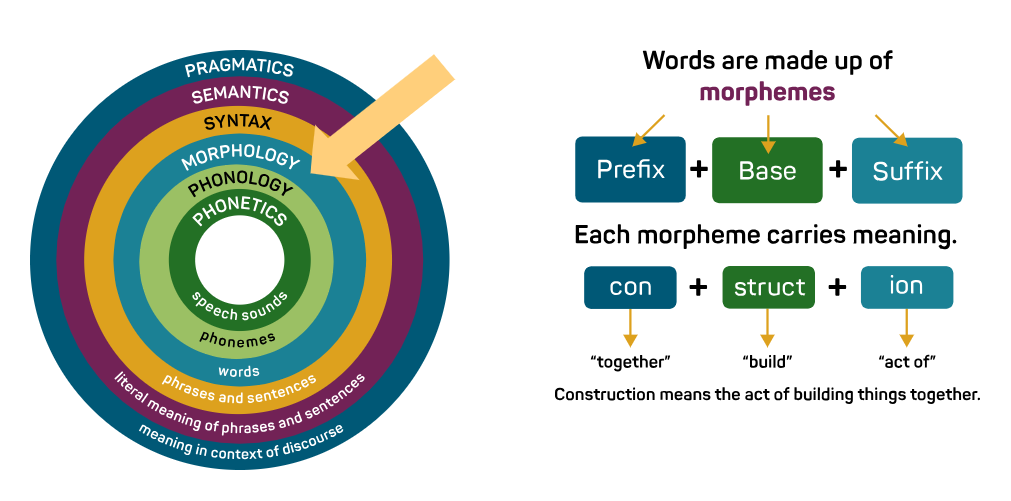
From Year 3, children use Emile to practise spelling. They begin by revisiting common exception words, including familiar words with spellings that can be tricky to work out using phonics alone. They then use Emile’s morphology programme to explore how words are built from meaningful parts, including root words, prefixes and suffixes.
Writing
Children begin to develop as writers through talk, drawing, mark-making and storytelling. In the early years, approaches such as Drawing Club help children use their imagination, explore new vocabulary and give meaning to the marks they make.
As children move through the school, teachers use carefully chosen model texts, including Grammarsaurus resources, to show how writers make decisions for different purposes and audiences. Children rehearse sentences aloud, learn how to organise their ideas and practise the techniques they will use in their own work. They write for a range of purposes, including telling stories, giving instructions, sharing information and writing from someone else’s point of view.
Handwriting is taught explicitly. In Reception, children learn letter formation through Read Write Inc. From Year 1, PenPals provides a consistent approach to developing accurate letter formation, joining and fluency. Teachers give feedback as children write and teach them to reread, edit and improve their work. We expect children to apply the same care to their writing across the curriculum.